I will try to be precise.
My name is not important. My occupation is not important, though you already know what I do. I returned to Berlin on a Tuesday. I had been away for work. The nature of the work is classified, but you know that too. I came home. My wife was in the kitchen. My son was in his room. Everything appeared normal.
I want to be clear about that. Everything appeared normal.
She told me she wanted a divorce. The way she said it was calm. Too calm. Like she had rehearsed the sentence so many times it had stopped meaning anything. I asked her why. She said she didn’t love me. I asked her if there was someone else. She said no. Then she said yes. Then she said it was complicated.
That is where I should have paid closer attention.
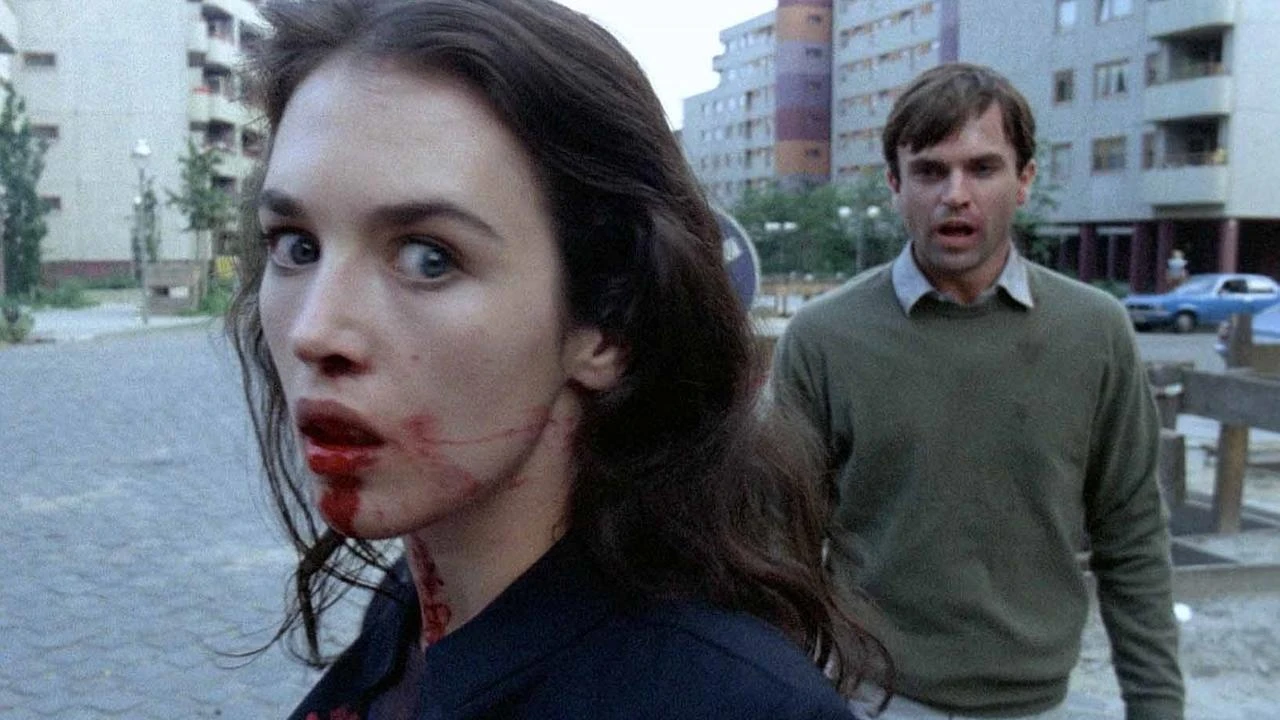
This is a film called Possession. It was made in 1981 by Andrzej Żuławski, a Polish director who had just gone through a divorce so devastating that he moved to West Berlin and wrote a screenplay about it. The screenplay was not a drama. It was not a meditation on the failure of love. It was a horror film. Because Żuławski understood something that most filmmakers who make divorce movies do not: the end of a marriage is not sad. It is violent. It is monstrous. Something is born in the space between two people who once loved each other, and that something has teeth.
He cast Isabelle Adjani as the wife. He cast Sam Neill as the husband. He set the film in West Berlin, in the shadow of the Wall. Division made visible. A city cut in half, and inside it, a marriage cut in half, and inside the marriage, something growing.
I followed her. I know that sounds like the behaviour of a jealous man. I was a jealous man. But I was also trained in surveillance, and the things I observed did not correspond to any pattern I had been trained to recognize.
She went to an apartment. Sebastianstraße. A derelict building near the Wall. She had a key. She went inside. She stayed for hours. When she emerged, she looked different. Not dishevelled. Not guilty. Altered. As though something inside her had been rearranged.
I confronted her. She told me about Heinrich. He was, I suppose, the conventional explanation. The other man. He was pretentious and theatrical and wore scarves. I went to see him. I hit him. He talked about the cosmos. None of this helped.
Because Heinrich was not the secret. Heinrich was the decoy.
There is a scene in this film that anyone who has seen it will never forget. Adjani is alone in a subway corridor. She is carrying groceries. She stops walking. She begins to scream. Not the scream of an actress performing distress. A scream that sounds like it is being pulled out of her body by force. She convulses. She thrashes against the wall. Milk spills. Eggs break. Her body contorts in ways that do not look voluntary. Something leaks from between her legs. The camera does not cut away. It watches. It lasts for minutes.
Adjani later said this scene took years off her life. She was not speaking metaphorically. After filming Possession, she did not work for months. She described the experience as something she survived rather than something she performed.
She won Best Actress at Cannes. The award barely begins to describe what she does in this film. She does not act. She detonates.
I found the apartment. I went inside.
I want to be precise about what I saw, but precision fails me here. There was something in the room. It was not fully formed. It was biological. It was wet. It had limbs, or what would become limbs. It was approximately the size of a man but it was not a man. Parts of it moved. Parts of it were still. It smelled like iron and seawater.
She had been visiting it. Feeding it. Sleeping beside it.
I need you to understand: I am not a man who believes in the supernatural. I am trained to observe and report. I am reporting what I observed.
She was in love with it.
Żuławski does not treat the creature as a metaphor. This is crucial. In a lesser film, the monster would be symbolic. It would represent the toxic thing that grows between two people during a divorce. It would be a projection of repressed desire or guilt or rage. You could write an essay about what it “really” means and feel satisfied.
Żuławski refuses that comfort. The creature is real. It is physically present. It drips. It pulsates. It was designed by Carlo Rambaldi, the same man who built E.T. and the creature from Alien. It occupies space. Adjani touches it. She holds it. The camera shows you everything.
The monster is not a metaphor for the marriage. The marriage is a metaphor for the monster. The feelings came first. The flesh followed.
There is something else I need to report. My son’s schoolteacher. Her name is Helen. She looks exactly like my wife. The same face. The same body. Adjani plays both roles. But Helen is everything Anna is not. She is calm. She is nurturing. She is patient. She exists in soft focus and warm light.
I do not know what Helen is. A wish. A replacement. A copy my wife made of herself before she became the thing she became. Or perhaps Helen is the mask, the performance of womanhood that the world expects, and Anna is what happens when the mask is torn off and the raw, tentacled, screaming truth underneath is finally allowed to breathe.
I do not know. I am reporting. I am not interpreting.
The film was banned in the UK. It was classified as a “video nasty.” In the United States, it was cut by nearly forty minutes. Distributors removed the horror, the gore, the creature. What remained was an incomprehensible domestic drama. They cut out the truth and left the lie.
The full version was unavailable for decades. It has resurfaced. A new generation has found it. They watch it and they feel what I felt when I opened the door at Sebastianstraße: the shock of recognition. Not because they have seen a creature in a derelict apartment. Because they have felt what it represents. The thing that grows when love turns. The thing nobody can name but everyone has touched.
I have nothing further to add. I have told you what I saw. I have tried to be precise. I understand that my account raises more questions than it answers. I understand that you may not believe me.
But you will watch the film. And then you will believe me. And then you will wish you didn’t.
Statement ends.
Possession Directed by Andrzej Żuławski France / West Germany, 1981 | 124 minutes

Leave a Reply