Draft 1
Dear Jake,
I’m thinking of ending things.
I don’t know how to say this. We’ve only been together six or seven weeks. You’re a nice person. This is not about you. I think I just need to focus on my work right now. I’m a painter. Or a physicist. Or a poet. Or a gerontologist. I’m something. I have a career that matters to me, and this relationship is —
No. Start over.
Draft 2
Dear Jake,
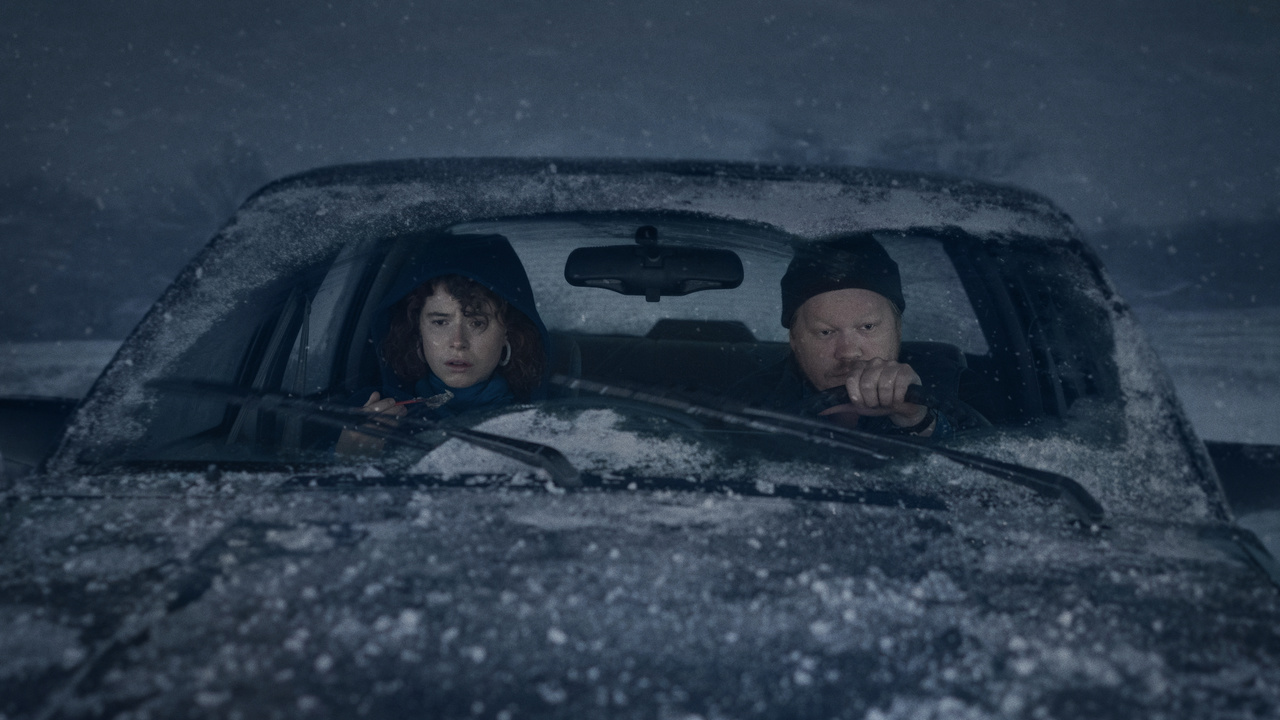
I’ve been meaning to tell you something. We’re driving to your parents’ farmhouse in Oklahoma. It’s snowing. You keep talking about things I don’t remember saying. You quoted something I said on our first date, but I don’t recognize the words. They sound like something from a Pauline Kael review.
Actually, they are from a Pauline Kael review. I know this because I just thought an entire paragraph about A Woman Under the Influence and the analysis was Kael’s, word for word, and I can’t tell whether I’m remembering her or whether I am her or whether the distinction matters.
I’m thinking of ending things.
This is the first of several problems with Charlie Kaufman’s 2020 film. The woman in the car — who may be named Lucy, or Lucia, or Louisa, or Ames — is narrating a breakup she hasn’t delivered yet, but her narration is built from borrowed material. Her opinions are Pauline Kael’s opinions. Her poem is someone else’s poem. Her memories don’t match the timeline Jake describes. She is a person composed entirely of references to other people, and she doesn’t seem to know it.
Or she does know it, and that’s worse.
Draft 3
Dear Jake,
We arrived at the farmhouse. Your parents are strange. Your mother’s age keeps changing. In one scene she’s middle-aged. In the next she’s elderly. In the next she’s dying. Your father does the same thing, but in a different direction. They aren’t aging over the course of a dinner. They’re aging over the course of a life, compressed into a single visit, and nobody at the table acknowledges it except me, and I’m not sure I exist.
Kaufman adapted this from Iain Reid’s 2016 novel. The novel is a thriller with a twist. Kaufman removed the thriller. He kept the twist, buried it so deep you might miss it entirely, and replaced the plot with something more disturbing: the experience of being inside a mind that is constructing a woman who will reject it.
That’s the reading most people arrive at. The young woman isn’t real. She’s a fantasy assembled by Jake — or by an older version of Jake, a janitor at a high school, a man living alone, a man who has been thinking of ending things in a different sense. The woman is made of everything he’s read, watched, admired, and wished he could share with someone. She recites Kael because he read Kael. She paints because he wanted someone who paints. She’s a physicist because the idea of her as a physicist appeals to him. She is a composite of desires that were never met, assembled into a passenger seat companion for a drive to a farmhouse where his parents are simultaneously alive, aging, and dead.
Draft 4
Dear Jake,
I’m not writing this letter. You’re writing this letter. I’m the letter.
Here is the thing about Kaufman that qualifies both Synecdoche, New York and I’m Thinking of Ending Things for this blog, and that makes them peculiar in ways that don’t overlap.
Synecdoche is a film about a man who builds a replica of the world to understand his life and succeeds only in replicating his failure to understand it. It sprawls. It accumulates. It gets bigger until it collapses.
I’m Thinking of Ending Things does the opposite. It contracts. It takes place mostly in a car and a farmhouse and a high school. The world gets smaller with each scene. The snow closes in. The roads narrow. The rooms shrink. And the woman at the center — the woman who is thinking of ending things — becomes less real as the film progresses, not because the film reveals she is fictional, but because the film reveals that the person imagining her is losing the ability to sustain the fantasy.
That’s what makes it devastating. Not the twist. The erosion.
Draft 5
Dear Jake,
Your parents’ house smells like something I can’t identify. The wallpaper changes between shots. There are pictures on the wall that seem to be of you at different ages, but some of them might be of other people. The dog shakes itself dry and never stops. Your mother laughs at something nobody said. The basement door is open. You tell me not to go downstairs. The film tells me not to go downstairs. Every element of the frame tells me not to go downstairs.
There is a janitor.
He works at a high school. We see him periodically, in scenes that don’t seem connected to the main narrative. He watches the students. He mops the floors. He eats alone. He watches a rehearsal of the musical Oklahoma! through a doorway. His scenes are shot in a different register — flatter, quieter, lonelier. He is the person the film is actually about, and the film takes over an hour to let you understand that.
Kaufman directs this like a man who knows you’ll figure it out and doesn’t care whether you do. The revelation isn’t the point. The experience is the point. The experience of watching a woman slowly realize that her thoughts are not her own, that her memories belong to someone else, that the drive will not end because the person imagining the drive cannot bear for it to end, because when the drive ends, the woman ends, and when the woman ends, the man is alone again.
Draft 6
Dear —
I’ve lost the name. It was Jake. Or it was always Jake. The farmhouse is gone. We’re at the high school now. It’s night. The hallways are empty. There is an ice cream shop inside the school that should not be there. There is a ballet. There is an old man on a stage accepting an award and giving a speech that is entirely composed of quotations from other speeches, and the audience is weeping, and the old man is Jake, and the speech is beautiful, and none of it happened.
The film ends with a song from Oklahoma!. The janitor is alone. The truck in the parking lot is buried in snow. It has been there all night. It will be there in the morning. Or it won’t. The question of whether the janitor survives the night is the question the title has been asking from the first frame, and Kaufman answers it the way he answers everything: by showing you something so precisely imagined that the fact of its imagination is the answer.
Draft 7 (unsent)
I’m thinking of ending things.
I don’t know who is thinking this. The woman who doesn’t exist. The man who invented her. The filmmaker who invented him. The viewer who watched it happen and could not intervene.
This is a film about the end of a fantasy, played at the speed of its collapse. It has no genre. It is not a horror film, though the farmhouse scenes are as frightening as anything Kaufman has ever made. It is not a romance, though the longing in it is total. It is not a puzzle film, though people will try to solve it. It is not a Charlie Kaufman film in the way Being John Malkovich is a Charlie Kaufman film — clever, recursive, pleased with its own architecture.
It is a film about a man sitting alone in a truck in a parking lot, in the snow, at night, thinking about a woman who was made of everything he loved and who was always, from the first frame, thinking of ending things.
The letter was never sent. It was never written. It was thought, in a car, on a drive, to a house that smells like age and ends like winter.
I’m Thinking of Ending Things Directed by Charlie Kaufman | United States | 2020 | 134 minutes


Leave a Reply