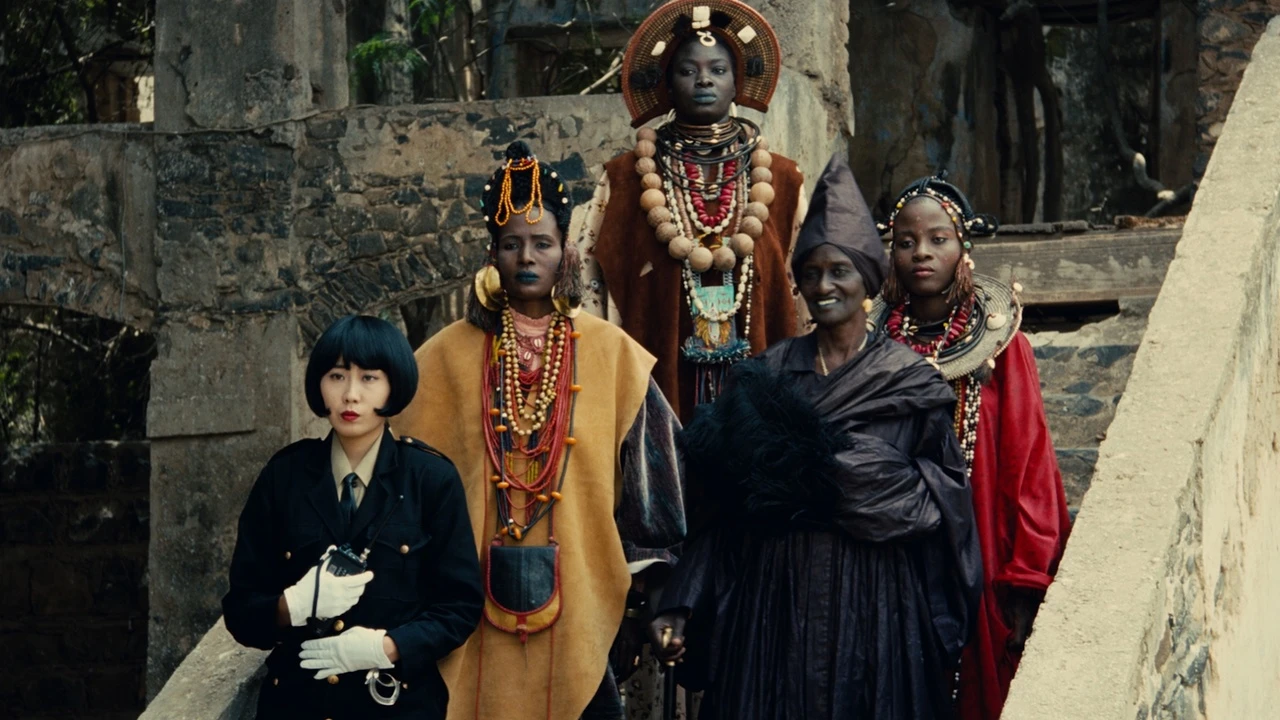
Account opened: The town of Colobane
Customer: The entire population Credit extended by: Linguère Ramatou Terms: To be settled upon delivery of one item (see below) Opening balance: Zero
Linguère Ramatou left Colobane decades ago. She was young and pregnant. The man responsible, Draman Drameh, denied paternity in court. Witnesses lied on his behalf. She was expelled from the town in disgrace. She became a prostitute. Then she became something else. Now she has returned, and she is the richest woman in the world.
She makes the town an offer. One hundred billion francs. New infrastructure. New schools. New everything. One condition. Draman Drameh must die.
The town refuses. The mayor gives a speech. The people applaud. Draman Drameh weeps with gratitude. The matter is settled.
Then the purchases begin.
Ledger entry No. 1
Item: New shoes (men’s, leather) Purchased by: Resident of Colobane Payment method: Credit Notes: The shopkeeper notices. He says nothing.
Djibril Diop Mambéty made Touki Bouki in 1973, a film about two lovers who dream of leaving Dakar for Paris. It was anarchic, ecstatic, edited like a fever. Twenty years later he made Hyenas, which is its opposite in almost every way. Where Touki Bouki vibrates with desire to escape, Hyenas sits perfectly still and watches a community purchase its own damnation, one item at a time.
The source material is Friedrich Dürrenmatt’s 1956 play The Visit. A bitter European fable about capitalism and collective guilt. Mambéty relocated it to Senegal, recast it with a predominantly Senegalese cast, and did something Dürrenmatt couldn’t: he made the town real. Not a parable-town. Not an allegory-town. A town with heat and dust and a butcher shop and children running between buildings. A place you’d recognize if you’d been there. A place where the new shoes look very, very good.
Ledger entry No. 2
Item: New dress (women’s, imported fabric) Purchased by: Wife of a town council member Payment method: Credit Notes: The fabric is expensive. Nobody in Colobane has worn fabric like this. The woman wearing it does not look at Draman Drameh when she passes him in the street. She used to.
Ledger entry No. 3
Item: Assorted goods, luxury food items, household furnishings Purchased by: Multiple residents Payment method: Credit Notes: The general store is busier than it has ever been. Everyone is buying. Nobody is paying. Nobody has discussed how the credit will be settled. Nobody needs to.
Here is what makes Hyenas peculiar, and what separates it from every other adaptation of Dürrenmatt’s play. Mambéty does not film the moral collapse as a crisis. He films it as shopping.
There are no agonized monologues about guilt. No scenes of townspeople wrestling with their conscience at night. No dramatic confrontations where someone says “we can’t do this.” Instead, there are shoes. Dresses. Imported goods. A slow, visible, material upgrade in the standard of living of an entire town, and the camera watching it happen with the patience of a ledger being filled in.
Draman Drameh walks through this town. He is the shopkeeper. He sees his customers wearing new clothes. He knows where the money is coming from. He knows it hasn’t arrived yet. He knows what will make it arrive. And the people wearing the new shoes know he knows, and they smile at him, and the smiles are the most frightening thing in the film.
Ledger entry No. 4
Item: Construction materials Purchased by: Town administration Payment method: Credit (authorized by the mayor) Notes: New buildings are going up. The town is being renovated. The money for this does not exist yet. Everyone understands the invoice.
Mambéty was not a prolific filmmaker. Between Touki Bouki in 1973 and Hyenas in 1992, he made short films and struggled with funding. He died in 1998 at the age of fifty-three, leaving behind only two features and a handful of shorter works. What he left is enough to place him among the most original filmmakers of the twentieth century, but the smallness of the body of work is part of the story. He made films the way Colobane spends money in Hyenas: on credit against a future that may not arrive.
Hyenas is his masterpiece. It screened at Cannes in 1992 to enormous respect and almost no commercial interest. It is one of the great African films. It is one of the great films about capitalism. It is one of the great films about what happens when an entire community decides, without ever holding a vote or signing a document, to do something unforgivable.
Ledger entry No. 5
Item: Yellow paint Purchased by: Unknown Payment method: Credit Notes: The bulldozer is yellow. Or the ceremonial platform is yellow. The color keeps appearing. Linguère Ramatou sits above the town in a palanquin, dressed in gold. She has a prosthetic leg and a prosthetic hand. She has been rebuilt, piece by piece, by money. The town is being rebuilt, piece by piece, by her money. The parallel is never stated. It doesn’t need to be.
Ledger entry No. 6
Item: One life Purchased by: Colobane (unanimous) Payment method: See terms of original credit agreement Notes: The scene is public. The town gathers. Draman Drameh is among them. He has known for a long time. He walks into the crowd. The crowd closes around him.
Mambéty does not show the killing. He shows the crowd. He shows what collective guilt looks like from the outside: a mass of people moving together, slowly, like an organism that has made a decision it will never discuss.
And then: the money arrives. The hundred billion francs. The town celebrates. Bulldozers flatten the old buildings. New ones go up. The economy booms. Linguère Ramatou leaves in a golden train. The hyenas — actual hyenas, shown periodically throughout the film, circling the edges of town — are never explained. They don’t need to be.
Account closed
Final balance: Paid in full Method of payment: One human life Receipt: The town of Colobane, renovated, prosperous, modern Outstanding debts: None on paper. Everything else.
The title is not a metaphor. It is a description. Hyenas are animals that do not hunt alone. They encircle. They wait. They move as a group. No single hyena makes the kill. The kill is collective. Responsibility dissolves into the pack.
Mambéty understood that the most terrifying thing about complicity is that it doesn’t feel like complicity. It feels like shopping. It feels like wearing new shoes. It feels like everyone around you doing the same thing, which means it must be normal, which means you can stop thinking about it. The ledger is clean. The account is settled. The shoes are beautiful.
Nobody discusses the price.
Hyenas Directed by Djibril Diop Mambéty | Senegal | 1992 | 110 minutes

Leave a Reply