
SEARCH: “Bacurau village Brazil location”
About 14,200 results (0.38 seconds)
Bacurau is a small settlement in the sertão of Pernambuco, northeastern Brazil. The sertão is the dry interior, the backlands, the Brazil that tourism brochures do not show. The land is scrub and dust and heat. The people who live here have lived here for generations. They know the land. The land knows them.
The film opens with a funeral. The village matriarch, Dona Carmelita, has died at ninety-four. People return from the cities for the burial. A truck carrying her coffin moves along a dirt road. Along the road, another truck has overturned, spilling coffins across the earth. Dozens of them. Cheap wood, scattered like furniture after a flood. The image is startling and unexplained. The film does not comment on it. The coffins are there. The road continues. The funeral proceeds.
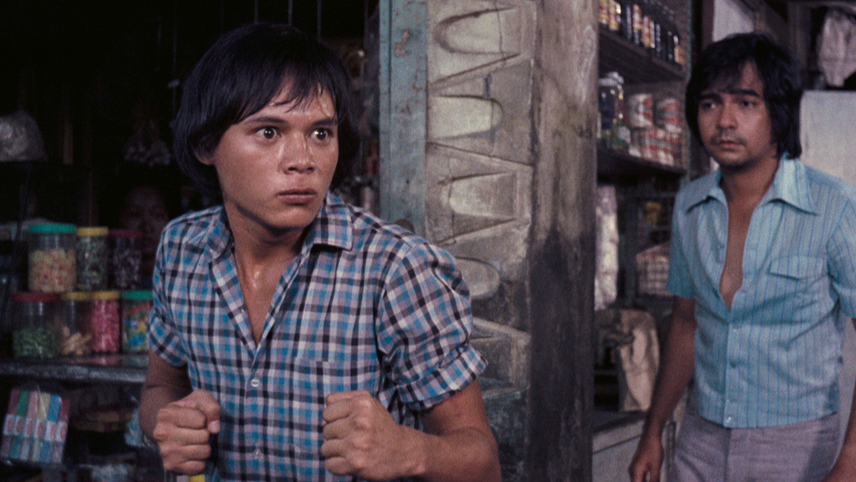
Kleber Mendonça Filho and Juliano Dornelles establish Bacurau with the patience and texture of social realism. You meet the schoolteacher. The doctor who returned from the city. The DJ. The sex worker who is also a community pillar. The local strongman politician who arrives with a truck of bottled water and expired food, throwing supplies at people who need them as though generosity and contempt are the same gesture. The village has a small museum. It has a church. It has a history, and the history is on the walls and in the faces and in the way people greet each other.
You believe you are watching a film about a community in mourning. You are. You are also watching something else, but the something else has not shown itself yet.
SEARCH: “Bacurau Pernambuco GPS coordinates”
About 3,100 results (0.42 seconds)
Someone in the village notices that Bacurau is no longer on the map. Not on paper maps. On the phone. The GPS dot that should mark the village has vanished. The satellite image shows scrubland where houses should be. The roads leading to Bacurau are still visible, but they lead to nothing. The village has been digitally erased.
This is presented without fanfare. A character checks a phone. The village isn’t there. Another character checks a different phone. Same result. The tone does not shift into thriller or conspiracy. The discovery is absorbed the way a community absorbs bad news: with irritation, concern, and the pragmatic understanding that someone is doing something to them, and that the someone has more power than they do.
Mendonça Filho made his reputation with Aquarius, a film about a woman who refuses to sell her apartment to developers. That film was about the quiet violence of capital, the way money erases people not through force but through pressure, paperwork, and the slow withdrawal of acknowledgment. Bacurau begins in the same register. A corrupt politician. A neglected community. The mechanisms of abandonment. You think you know this story.
You do not know this story.
SEARCH: “Bacurau sertão missing from map”
About 870 results (0.51 seconds)
A drone appears in the sky above the village. It is shaped like a flying saucer, small and silent. The children notice it first. They throw rocks at it. The adults look up. The drone watches them the way a camera watches an animal before the hunt.
Then outsiders arrive. Two motorcyclists, white, wearing gear that doesn’t belong to the region. They ride through the village. They smile. They take photos. They behave like tourists in a place where tourists have never been. Their Portuguese has an accent no one can place.
They are not tourists. They are scouts.
What follows, you must discover for yourself. What can be said: the film shifts. Not slowly. Not with a careful tonal transition. The shift is sudden and absolute, like a door opening onto a room you did not know was attached to the house. Bacurau goes from social realism to something that draws from the Western, from survival horror, from revenge cinema, from political allegory, and from a fury so precise and so controlled that it feels less like anger and more like the correction of a long-standing error.
SEARCH: “Bacurau Brazil what genre”
About 210 results (0.63 seconds)
The results are thinning. The question itself is unstable. Genre requires that a film operate within a recognizable framework, and Bacurau has burned through every framework it started with and is building a new one from the wreckage.
Udo Kier is in this film. He plays a character whose identity and purpose should not be revealed here, but his presence alone tells you something has changed. Udo Kier does not appear in social realist dramas about northeastern Brazil. He appears in films by Lars von Trier, Paul Morrissey, Gus Van Sant. His face belongs to a different cinema, and when that face appears in Bacurau, the film has formally announced that it is no longer the film it was pretending to be.
Sônia Braga plays the village doctor, Domingas, and she is extraordinary. She is tough and tired and drunk in the afternoon and utterly devoted to the community in the way that only someone who left and came back can be devoted. She has the authority of a woman who has seen the city and knows what the city thinks of places like Bacurau, and she has returned anyway, because the place that made her is the place she refuses to let disappear.
The village fights back. This is not a spoiler. The entire film has been preparing you for this, if you were paying attention. The museum. The history on the walls. The way the community absorbs its dead and remembers its past and teaches its children. Bacurau is not a helpless place. It is a place with memory, and memory in this film is a weapon.
SEARCH: “Bacurau film explained”
About 40 results (0.78 seconds)
There is nothing to explain. The film is clear. It is the clearest film on this site. The politics are explicit. The allegory is not hidden. Northeastern Brazil has been neglected, exploited, and forgotten by its own country and by the wider world, and Bacurau imagines what happens when a community that has been treated as expendable decides, collectively, that it is not.
What makes this peculiar is not the politics. Plenty of films have politics. What makes it peculiar is the vehicle. Mendonça Filho and Dornelles built a genre-dissolving object that begins in one cinema and ends in another, that uses the grammar of exploitation film and survival horror to deliver a political argument that no arthouse film has managed to deliver with this force, and that does all of this while being wildly, recklessly entertaining. Bacurau is fun. It is thrilling. It has sequences that make you want to cheer. And it earns the cheering because it has spent its first half making you understand exactly who these people are and exactly what is being done to them.
The film won the Jury Prize at Cannes in 2019. It became a phenomenon in Brazil. It was embraced by audiences who do not normally watch arthouse cinema and by arthouse audiences who do not normally cheer. It crossed every boundary it encountered, which is appropriate for a film about the failure of boundaries to contain a community that refuses to be erased.
SEARCH: “Bacurau”
No results found.
The village is gone from the search engine. The GPS shows nothing. The satellite image is empty scrub.
But the village is there. It has always been there. It will be there after the technology that tried to erase it has become obsolete. The people know the land. The land knows the people. The digital record is someone else’s story, and Bacurau has its own.
There is no genre for this film because the film rejects genre the way the village rejects erasure: not by arguing against it but by surviving it. Bacurau is a social drama, a Western, a horror film, a war film, a political manifesto, and a love letter to a place and a people that the world’s mapping systems would prefer to delete. It is all of those things and it refuses to choose between them, because choosing would mean accepting a framework designed by someone who has never been here and does not know the name of the bird the village is named for.
Bacurau. A nocturnal bird of the sertão. It comes out after dark. It sees everything. It has been here longer than the maps.
Bacurau — Directed by Kleber Mendonça Filho and Juliano Dornelles. Brazil, 2019. 131 minutes.


Leave a Reply